
Jinling Coal Mine: One Robot Solves Years of Troubles from Coal Slurry
As a coal production enterprise, Shandong Jinling Coal Mine channels all washing wastewater into on-site sedimentation tanks, which accumulate large volumes of hardened high-concentration coal slurry all year round with a stable solid content of 50%. Long-term accumulation of dense coal slurry has triggered multiple operational troubles:
The effective volume of sedimentation tanks keeps shrinking, greatly weakening their water storage and sedimentation capacity. Hardened coal slurry creates enormous difficulties for dredging operations.
Conventional dredging equipment delivers poor pumping capacity, resulting in lengthy single dredging cycles, high comprehensive costs of labor, machinery and transportation, as well as extremely low dredging efficiency.
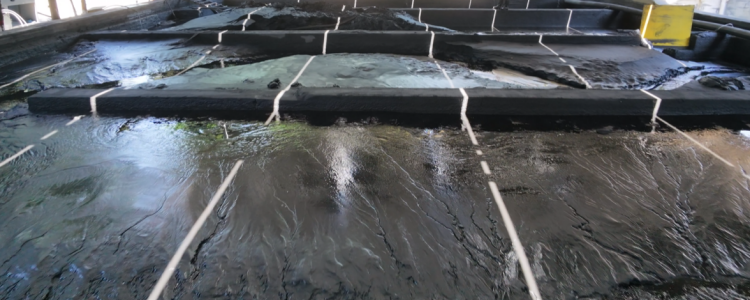
To fundamentally resolve the bottleneck of coal slurry treatment in sedimentation tanks, Jinling Coal Mine conducted extensive research and comparison, and finally reached an in-depth project cooperation with our institute, introducing intelligent silt dredging robots and implementing an integrated automatic dredging solution.
Targeting the site conditions of Jinling Coal Mine, including 50% solid hardened coal slurry, limited space inside sedimentation tanks and high demand for continuous operation, our professional technical team conducted on-site surveys at the mine and customized a complete set of dredging workflows.
Equipped with a front crushing and stirring mechanism plus a high-flow wear-resistant cutter suction conveying system, the whole set of equipment adopts an integrated operation mode: crush and loosen first, then pump and discharge via cutter suction. Submerged in sedimentation tanks, the robot fully breaks up and dilutes hardened agglomerated coal slurry through rotating crushing devices. The high-wear-resistant cutter suction pump then performs continuous pumping, transporting coal slurry over long distances to designated stacking and filter-pressing areas through matched pipelines. No manual entry into tanks or secondary transshipment is required throughout the process.
The equipment supports remote visual control. Staff can monitor real-time underwater operation status safely on the bank, and only two operators are needed to control and inspect all equipment, realizing thorough separation of workers and operating zones without any personnel descending into the tank for dredging.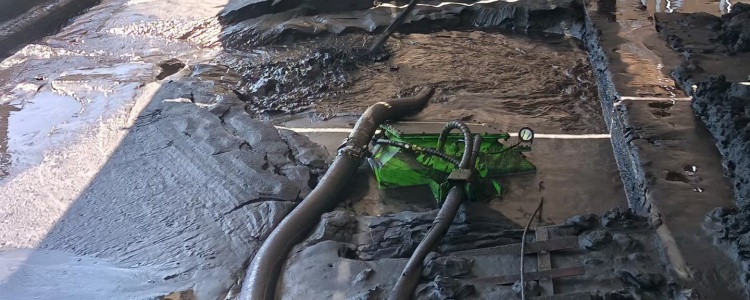
After the official deployment and commissioning of the dredging robot, all operating indicators far exceeded the mine’s expectations and comprehensively eliminated the drawbacks of the original treatment method:
Running stably, the robot can clear 200 cubic meters of silt per hour. Compared with traditional manual and small machinery dredging, the workload that once required dozens of workers to complete over several days can now be finished by the robot within just a few hours for the same volume of silt. The overall operation efficiency has increased hundreds of times, the dredging cycle of sedimentation tanks is drastically shortened, and regular cyclic dredging can be carried out on demand to completely eliminate blockages caused by accumulated coal slurry.
The exclusive crushing mechanism specially addresses the problems of difficult pumping and frequent pipe blockages of 50% solid hardened coal slurry. Broken coal slurry flows smoothly during transportation without pipe clogging or repeated rework. Dredging covers every corner thoroughly; bottom edges and deep silt deposits can be fully cleared in one go, fully restoring the water storage capacity of sedimentation tanks.
The traditional mode requiring dozens of workers to work inside tanks is eliminated. Only 1 to 2 remote operators are needed per shift, greatly cutting expenditures on labor wages, labor protection and safety supplies. With no staff entering silt sedimentation tanks at all, safety hazards such as tank collapse, silt burial, harmful gas leakage and dust pollution are completely avoided, achieving zero safety risks during dredging operations.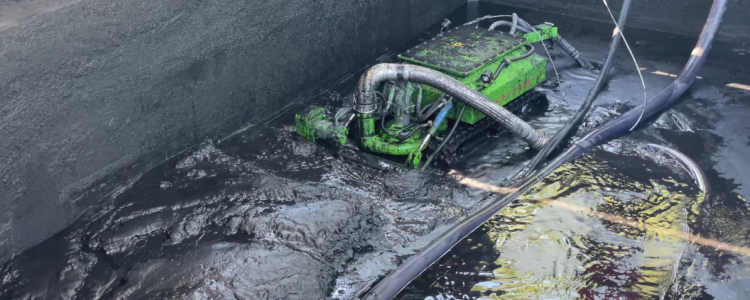
With sedimentation tank blockages fully resolved, the load of drainage and coal washing systems returns to normal, reducing abrasion and loss of pumps and pipelines caused by coal slurry particles and significantly lowering equipment maintenance and replacement costs. Dredging can be carried out simultaneously with mine production without large-scale production halts, causing no delays to normal mining and coal washing schedules. Meanwhile, it facilitates the mine’s environmental compliance. Uniformly collected coal slurry is convenient for subsequent recycling and resource utilization of solid waste.